Blog

Re. Sanctuary of Our Lady of Blood

Pubblicato : Lundi, 26 février, 2024 - 14:33


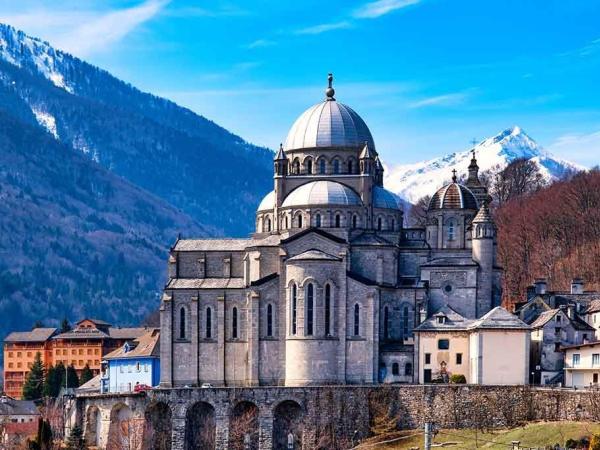
Located at the eastern end of the Vigezzo Valley, it originated from a miraculous event that occurred back in 1494. A young man intent on playing a traditional game, the piodella, angry at his defeat threw a stone towards the church, hitting the very portrait of the Madonna painted on the church of San Maurizio. The next morning, the fresco of the Madonna began to bleed from his forehead and continued to gush profusely for about twenty days. The bishop of Novara then decided to build a majestic and imposing sanctuary. It was built from two buildings, one originally from the 17th century and the other from the 20th century entirely in granite, integrated with a dome with four towers.


Click here to return to the menu:

https://lecollinedimaggiora.com/it/news/101-things-do-or-see-alto-piemonte
 

Santa Maria Maggiore

Pubblicato : Dimanche, 25 février, 2024 - 10:31


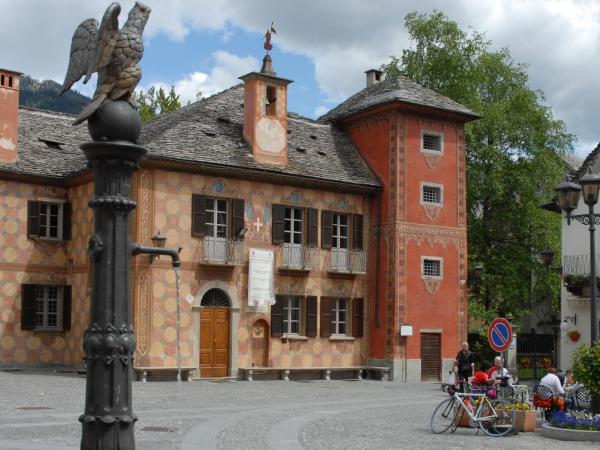
The village of Santa Maria Maggiore, intact in its wonderful mountain architecture, is located in the Vigezzo Valley, also known as the Valley of the Painters or the Valley of the Chimney Sweeps. Not many people know that Santa Maria Maggiore hosts the International Gathering of Chimney Sweeps every year and even has a museum dedicated to them. Inaugurated in 1983, the exhibition shows the hard work of the chimney sweep throughout history, a craft typical of the area. Right in the centre of the village stands its parish church: the imposing and majestic Church of Santa Maria Assunta Vergina, rebuilt between 1733 and 1742 on the site of the previous (Romanesque) 12th-century church. For lovers of relaxing walks, finally, do not miss the Pineta.


Click here to return to the menu:

https://lecollinedimaggiora.com/it/news/101-things-do-or-see-alto-piemonte
 

Domodossola. Vigezzina-Centovalli Railway

Pubblicato : Samedi, 24 février, 2024 - 16:59


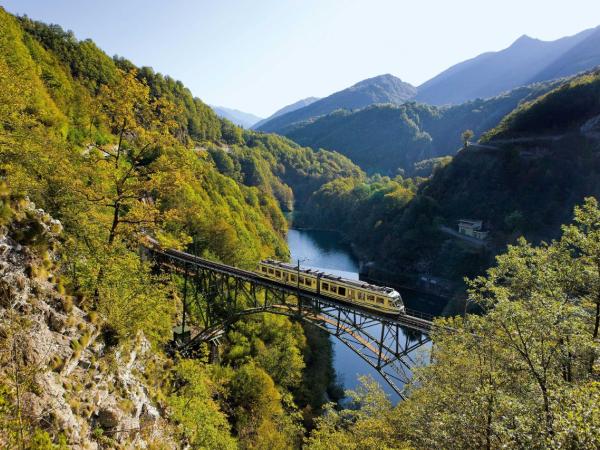
The exciting itinerary from Domodossola to Locarno, on Swiss territory, with the Centovalli - Ferrovia Railway, through the Vigezzo Valley known as the 'valley of the painters', winds its way through forests, high plateaus, wild mountains, pretty villages and gentle plateaus. The route is fascinating throughout the year, suitable in every season. The autumnal colours of the foliage make this trip one of the unmissable experiences in the Ossola Valley between the end of September and the beginning of November; the whitewashed landscapes make it magical and romantic in winter; the explosion of green in spring and summer turns it into a dive into the most uncontaminated nature.


Click here to return to the menu:

https://lecollinedimaggiora.com/it/news/101-things-do-or-see-alto-piemonte
 

Domodossola. The historical centre

Pubblicato : Samedi, 24 février, 2024 - 12:59


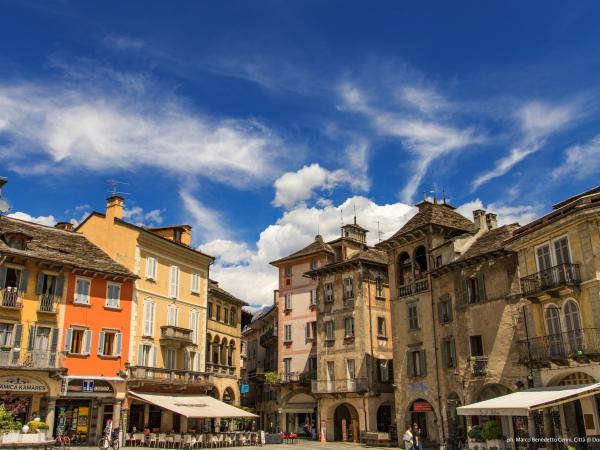
The historical centre of Domodossola still retains a medieval appearance with narrow streets and winding lanes. The fulcrum is the Piazza del Mercato, a real jewel of Renaissance art adorned with fascinating 15th-century arcades. The Market Square is overlooked by several Renaissance palaces, such as the impressive Palazzo Silva, built during the Renaissance and now a national monument. This building is famous for its window frames made of Crevola marble and the spiral staircase that connects all floors within the house. Equally evocative are Palazzo Mellerio, today the seat of the municipal police and some municipal offices, and the Palazzo di Città, today's municipal seat, built in 1847 and inside which is the historical hall of the Ossola Resistance, while a plaque commemorates the motivation for the gold medal for military valour awarded to the Ossola valley after World War II.


Click here to return to the menu:

https://lecollinedimaggiora.com/it/news/101-things-do-or-see-alto-piemonte
 

Macugnaga

Pubblicato : Vendredi, 23 février, 2024 - 10:26


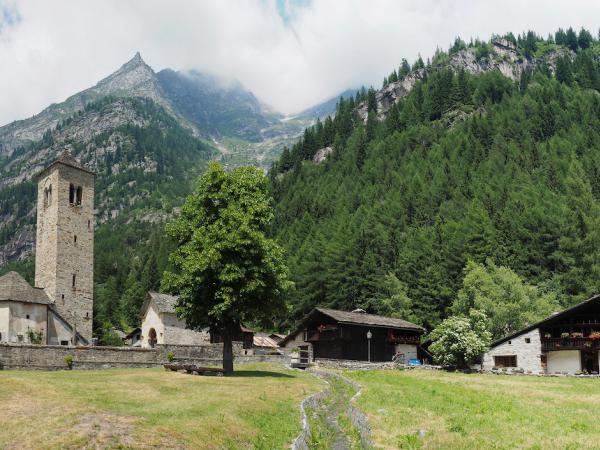
Located at the foot of Monterosa, Macugnaga is known not only for the extraordinary panorama it offers, but also for the typical wooden houses of the Walser civilisation, as well as for the practice of winter sports. In fact, it boasts a great mountaineering history, linked above all to the famous east face of Monterosa (4634 m), the highest in the Alps. The symbol of Macugnaga is the Chiesa Vecchia (Old Church), a Romanesque building dating back to 1300, flanked by a spectacular centuries-old lime tree with a circumference, at its base, of 7 metres. Interesting examples of Walser dwellings include the Mountain Museum, in the hamlet of Staffa, and the Walser House Museum, in the hamlet of Borca, which reproduces a traditional local hut.


Click here to return to the menu:

https://lecollinedimaggiora.com/it/news/101-things-do-or-see-alto-piemonte
 

Toce Waterfall

Pubblicato : Vendredi, 23 février, 2024 - 10:01


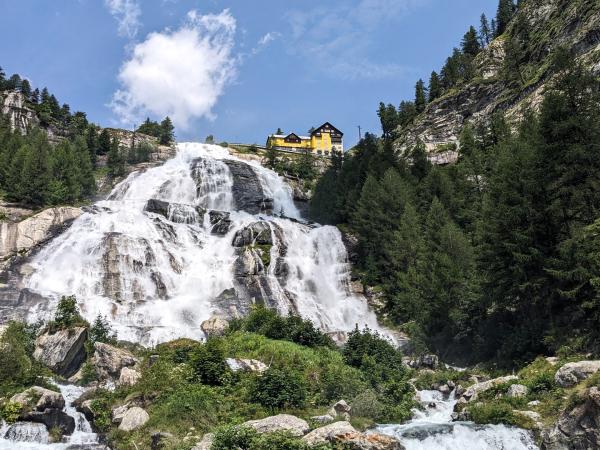
The symbol of Val Formazza with a drop of 145 metres, it is considered one of the most beautiful and majestic in Europe, although human intervention has reduced its flow for much of the year. In fact, upstream of the waterfall, the Toce forms Lake Morasco, an artificial lake from which water is captured for the operation of hydroelectric power stations. The waterfall offers unique and unforgettable scenery, nestled in the mountains of a beautiful valley covered with large coniferous forests, meadows, pastures and alpine lakes. At the top of the waterfall is the historic hotel (1863), which lived the bell'epoque of Alpine tourism at the turn of the century.


Click here to return to the menu:

https://lecollinedimaggiora.com/it/news/101-things-do-or-see-alto-piemonte
 

Baceno. Orridi di Uriezzo

Pubblicato : Jeudi, 22 février, 2024 - 15:43


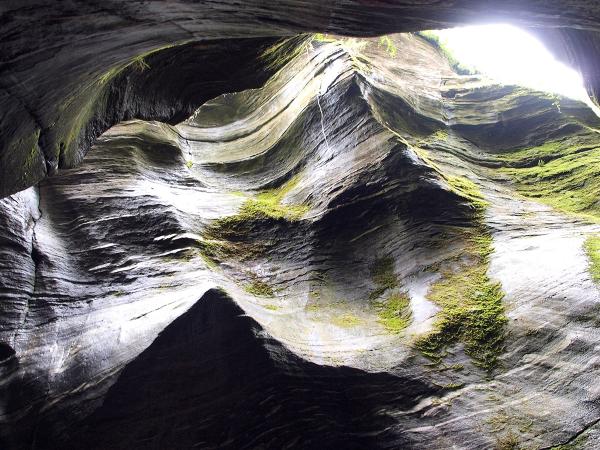
Can canyons also exist in Piedmont? Well yes, in the Antigorio Valley there is a series of canyons carved into the granite by torrents that in the past flowed downstream of the Toce Glacier and called Orridi di Uriezzo. About 12,000 years ago, this was the site of the Toce Glacier, in whose valley numerous streams and waterfalls flowed, eroding the rock over time to form this particular and fascinating natural spectacle that we now call 'Orridi di Uriezzo'. The narrow valleys, tortuous tunnels and gorges that can be admired today were formed once the glaciers disappeared. The drying up of the various streams fed by the glaciers left room for a veritable canyon that can be visited on foot today.


Click here to return to the menu:

https://lecollinedimaggiora.com/it/news/101-things-do-or-see-alto-piemonte
 

Baceno. Church of San Gaudenzio

Pubblicato : Mardi, 20 février, 2024 - 21:18


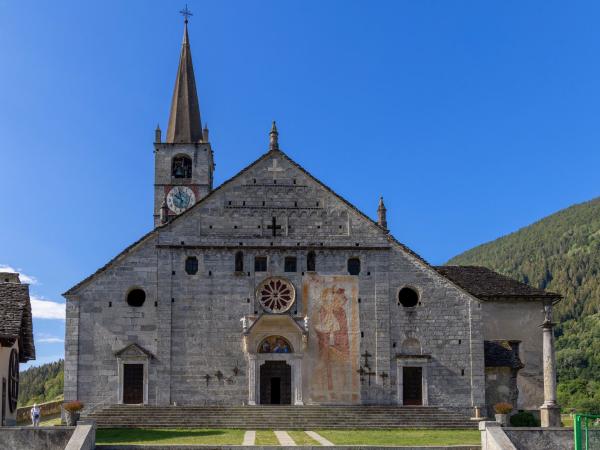
Situated on a rocky spur, the Church of San Gaudenzio is one of the best examples of Romanesque architecture in Italy. The present building is the result of an interesting superimposition of extensions from different periods. In fact, the earliest evidence of the church is in a document from the early eleventh century. The splendid Romanesque façade is made entirely of stone and on its right side one can admire a gigantic St Christopher painted in 1542. The Monumental Church of San Gaudenzio in Baceno at night is at its best, thanks to a recent work of implementation of the lighting points that further enhance its most relevant architectural aspects.


Click here to return to the menu:

https://lecollinedimaggiora.com/it/news/101-things-do-or-see-alto-piemonte